We build with clarity, act with integrity, and always stay curious.
Why We Look Deeper
Most workplace risk does not begin with what is visible. Psychosocial risks often hide in what isn't seen or said.
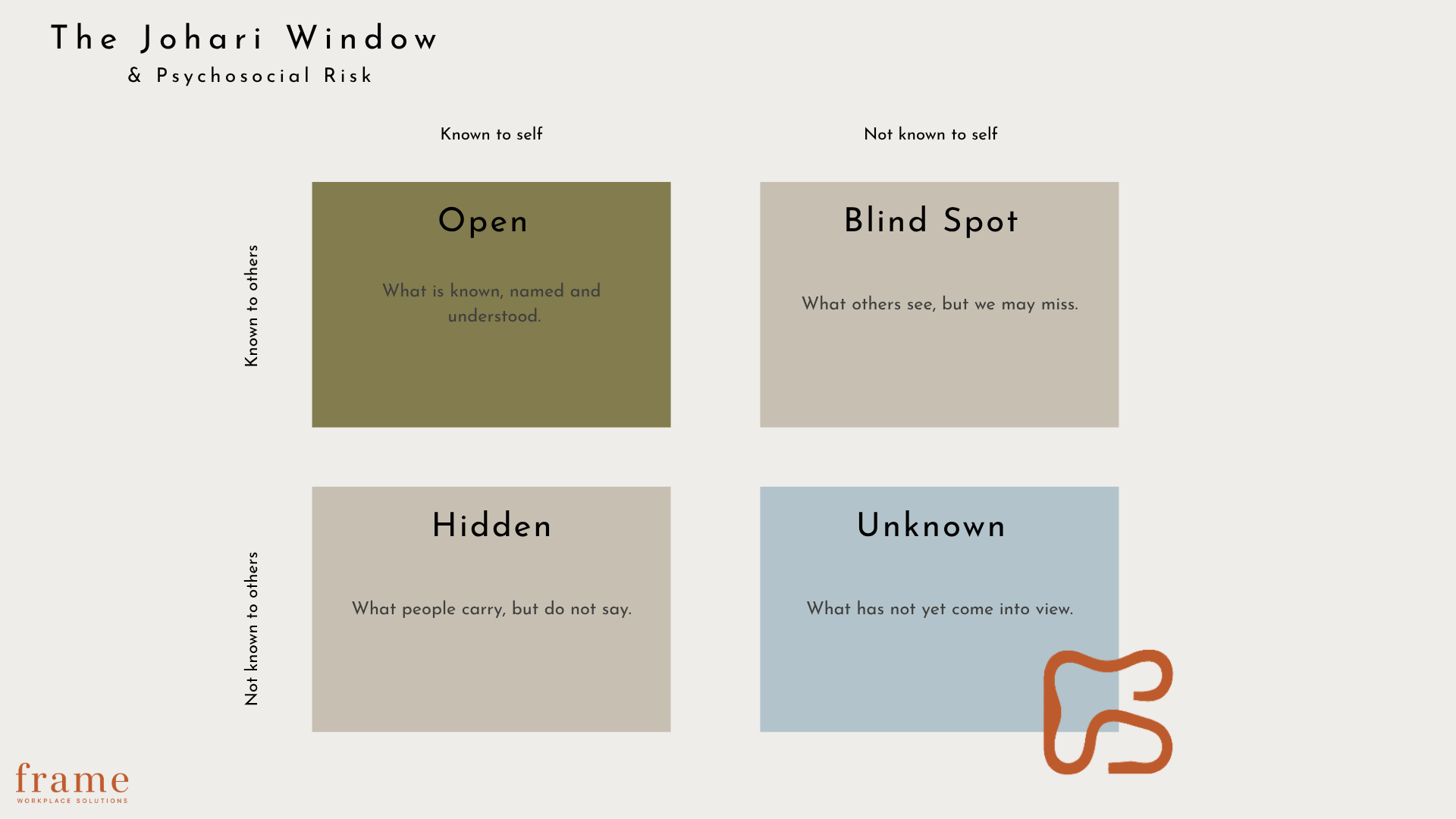
The Johari Window gives Frame a way to look at the spaces between what is known, what is hidden, what others can see, and what has not yet been named. In a workplace, these spaces matter. They are where unspoken pressure can sit. Where leadership blind spots can form. Where people may carry concerns quietly, long before they are raised formally. And where psychosocial risk can grow beneath the surface of everyday work.
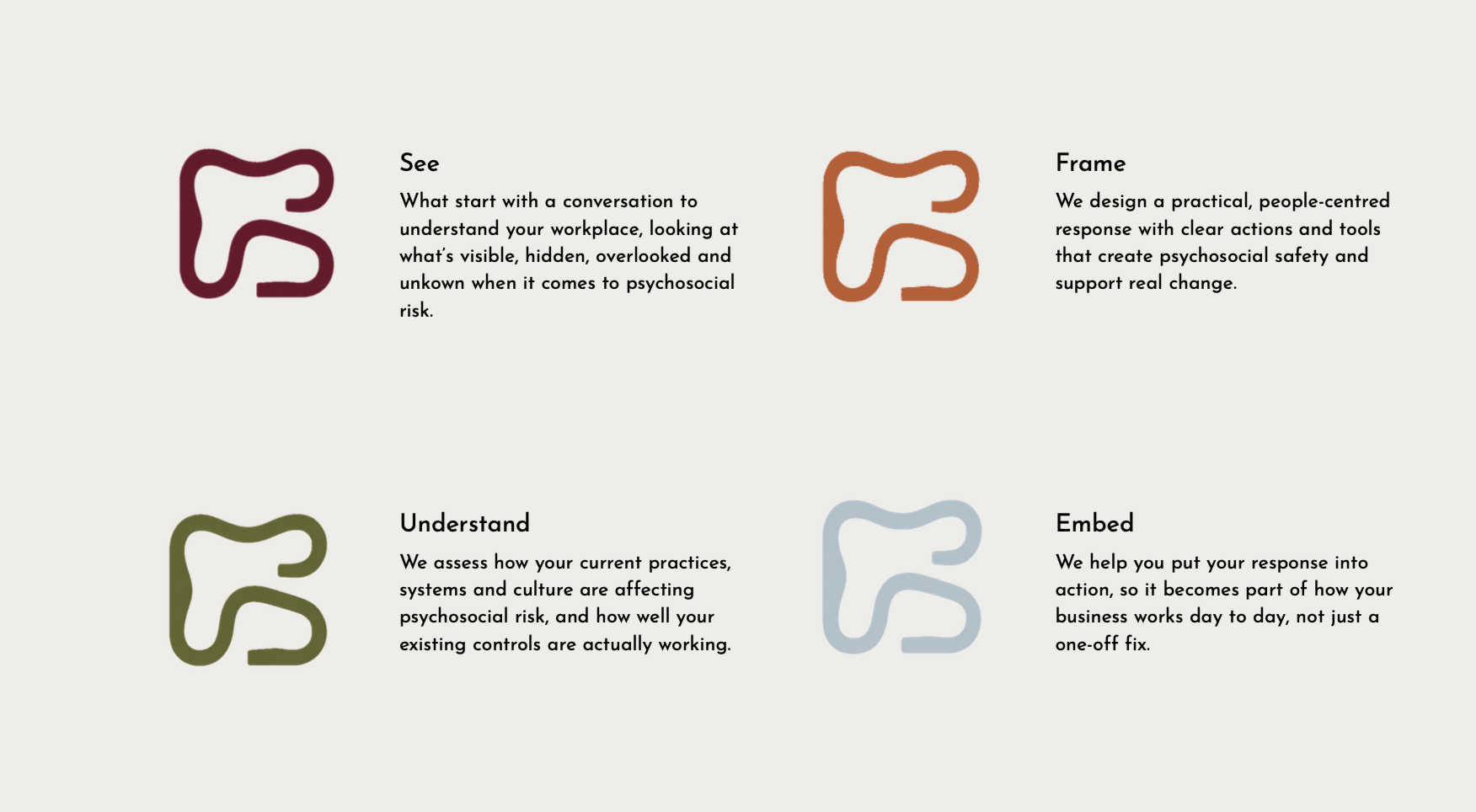
Frame helps organisations bring more of this into view. Through a human resources lens, we work with businesses to understand what is really shaping their workplace experience, identify psychosocial hazards, and create practical responses built into the way people lead, communicate and work.
Because safer workplaces are not created by policy alone. They are created when organisations are willing to see clearly, listen carefully and act with intention.